

CPTED Architecture
Designing for Safety: CPTED in Architecture
Feb 15, 2026
Designing for Safety: A Guide to CPTED in Architecture
A well-designed building does more than offer shelter, it provides comfort, inspires, and most importantly, creates a sense of safety. Walking into a thoughtfully designed space should immediately make us feel secure and at ease. But how do we craft environments that are not only secure but also warm and welcoming?
The answer lies in Crime Prevention Through Environmental Design (CPTED).
CPTED is an innovative approach that uses environmental design to discourage criminal behavior. It shows us that safety doesn’t have to rely on fences, harsh lighting, or intimidating security measures. Instead, security can be seamlessly integrated into a building’s design, creating spaces that are both safe and beautiful.
At Didier Architecture, we are proud to have two certified CPTED practitioners on our team, including Dr. Didier, a subject matter expert known for her work using CPTED principles to mitigate targeted violence on K-12 school campuses. Through her leadership, we ensure that our designs are not only innovative but also deeply informed by expertise in creating safer environments.
This guide explores CPTED's core principles, its benefits, and how Didier Architecture integrates these strategies to design spaces that inspire, protect, and enhance communities.
What is Crime Prevention Through Environmental Design?
CPTED is based on a simple yet powerful premise: the way we design and use the built environment can directly influence human behavior and reduce crime. By shaping spaces thoughtfully, we can discourage unwanted activities while encouraging positive interactions.
Architecture is more than functionality; it reflects aspirations and values. By applying CPTED principles, we use design elements like light, space, landscaping, and materials to naturally prevent crime. This approach ensures safety is a priority from the very first stages of the design process, resulting in spaces that feel open, inviting, and inherently secure.
The Core Principles of CPTED
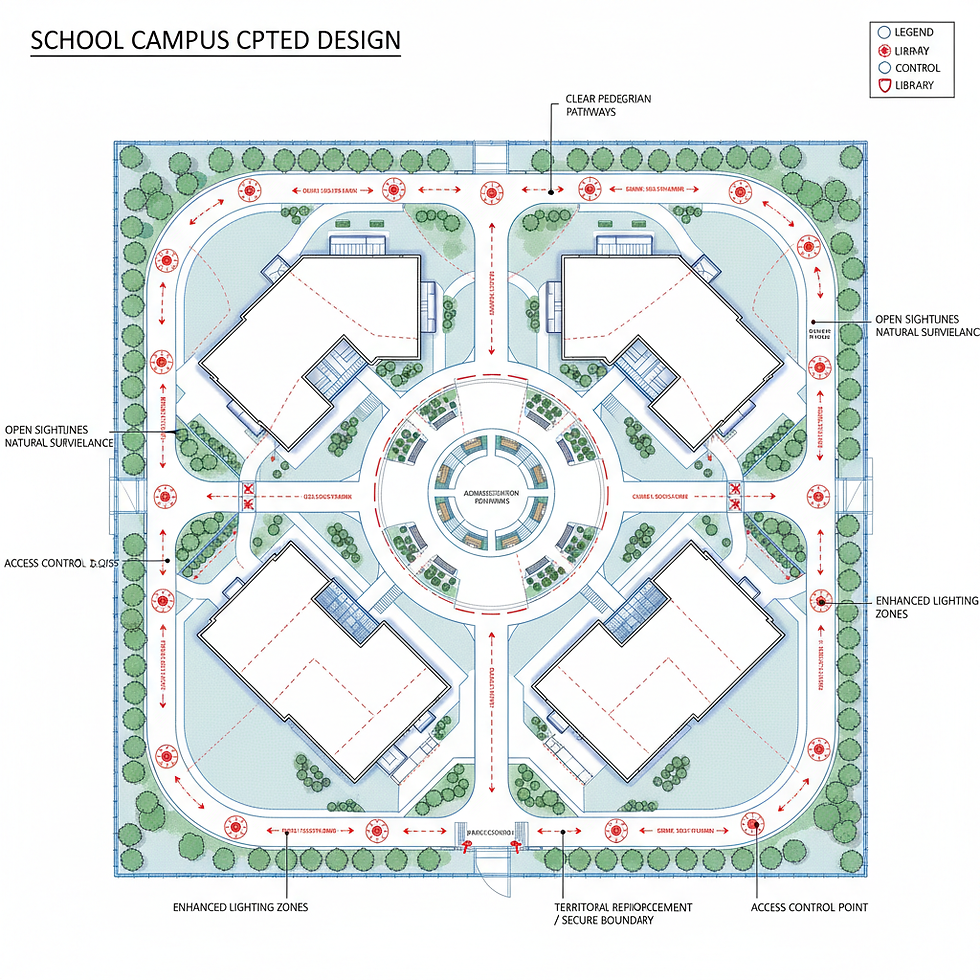
CPTED strategies work together to create safe spaces in a way that feels natural and unobtrusive. Here are the primary principles:
Natural Surveillance: Visibility for Safety
Criminals avoid being seen. Natural surveillance enhances safety by increasing visibility. When spaces are well-lit and highly visible, people feel safer, and those with harmful intentions feel exposed.
At Didier Architecture, we achieve this by incorporating large, strategically placed windows, transparent materials in lobbies and stairwells, and thoughtful lighting design. Landscaping is carefully planned to maintain clear sightlines, using low shrubs and high tree canopies to ensure visibility across the property.
Natural Access Control: Guiding Movement
Natural access control directs people to designated entrances and routes while discouraging access to restricted areas. This is achieved using pathways, lighting, fences, and landscaping that naturally guide movement.
We use subtle barriers like decorative planters, low walls, or unique paving textures to define public and private areas. These elements clearly signal where visitors should go, while unauthorized access becomes immediately noticeable.
Territorial Reinforcement: Building Ownership
People protect spaces they feel connected to. Territorial reinforcement uses design to create a sense of ownership that deters crime. By defining boundaries and promoting active use, spaces feel cared for and secure.
At Didier Architecture, we cultivate this sense of ownership using hardscaping, signage, and boundary markers. Transitions like a public sidewalk shifting to a semi-private courtyard are clearly defined. Inviting features like seating, gardens, and public art encourage active use, naturally deterring negative behavior.
The Benefits of CPTED
CPTED goes beyond preventing crime, it enhances the overall environment and creates thriving, vibrant spaces.
Increased Safety and Reduced Crime
Implementing CPTED strategies reduces vandalism, theft, and trespassing by limiting opportunities for crime. Properties designed with CPTED experience fewer security incidents, cutting long-term costs associated with repairs and security measures.
Improved Community Well-Being
Safety is essential for well-being. Spaces designed with CPTED principles foster a sense of security, reducing anxiety and promoting comfort. Whether it’s walking to a car at night or letting children play outside, CPTED creates environments where people feel safe.
Beautiful and Welcoming Design
Security doesn’t have to look intimidating. CPTED integrates safety features directly into architecture and landscaping, maintaining beauty and warmth. The result is spaces that are both visually stunning and inherently secure.
How Didier Architecture Brings CPTED to Life
At Didier Architecture, we pair technical expertise with creative vision to design spaces that are as safe as they are inspiring. With two certified CPTED practitioners on our team, including Dr. Didier, a leading expert in applying CPTED to mitigate targeted violence on K-12campuses, we bring unparalleled knowledge to every project.
Collaborative Design Process
We begin every project with collaboration. By working closely with clients, stakeholders, and user groups, we gain a deep understanding of your needs, concerns, and aspirations.
Dr. Didier and our team can conduct site visits to identify security challenges and opportunities, tailoring CPTED strategies to fit your specific environment.
Seamless Integration of Safety and Style
We don’t add security as an afterthought; we weave it into the core of our designs. Whether it’s a light-filled lobby that naturally directs visitors or tiered landscaping that defines boundaries, our designs balance style and functionality.
We ensure you can envision the results during design presentations, showing how each CPTED element improves safety while enhancing beauty.
Practical Innovation
While we embrace innovation, our designs are grounded in practicality. Drawing from the latest research in environmental psychology and urban planning, we choose solutions that are effective, sustainable, and easy to maintain.
This approach ensures your building remains secure and vibrant for years to come.
Let’s Build Safer Spaces Together
Safe, beautiful design doesn’t require heavy-handed tactics. With CPTED, we can create spaces that protect people while remaining open and welcoming.
Whether you’re planning a new development, renovating a property, or designing a K-12 campus, Didier Architecture’s expertise ensures a thoughtful approach to safety.


Related Posts